
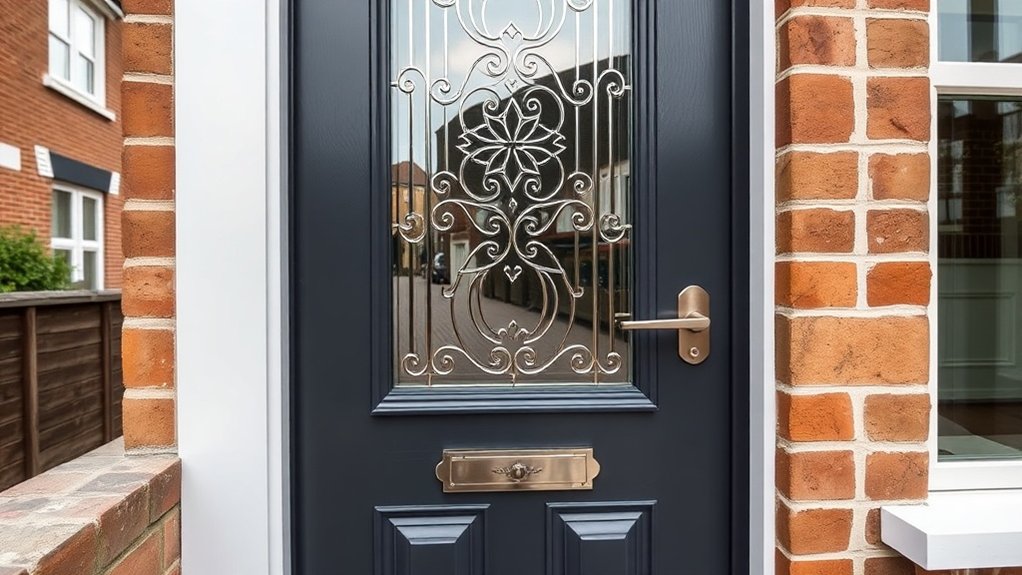
A composite front door is only as good as the glass set into it. Our composite door glazing service in Dartford covers the sealed units, decorative panels and side lights that go into a GRP or timber-core door, from a slim top light on a terrace to full-height panels on a new-build townhouse. We specify low-E, argon-filled units with toughened or laminated panes, so the door keeps heat in, keeps intruders out and cuts street noise, and we match the pattern to the door colour, the hardware and any lease or conservation rules.
Key insights
- Composite door glazing in Dartford uses sealed units with low-E coatings, warm-edge spacers and argon fills so the glazed section is no longer the cold spot in the entrance.
- Laminated or toughened glass, fitted from the inside with secure beading, is what lets a glazed door meet PAS 24 and qualify for Secured by Design.
- Pattern choice should follow the house: bevels and leading for Victorian doors, geometric cames for 1930s semis, satin or clear units for modern builds.
- Laminated acoustic glass with panes of unequal thickness gives a noticeable drop in traffic noise on busy Dartford, DA1 roads.
Composite Door Glazing in Dartford: What It Is
A composite door is a slab with a dense insulating core, usually polyurethane foam or timber, wrapped in GRP skins and hung in a reinforced frame. The glazing is the part of that slab cut away and filled with a sealed glass unit held in a cassette. In Dartford we fit those units to new doors and replace failed or dated glass in existing ones. The glass is a double or triple-glazed unit in its own right, with a low-E coating, a spacer bar and a gas fill.
The glazed area controls how much daylight reaches the hallway, sets how much of the hall is visible from the pavement, and is the one part of the door that could be broken to reach the lock.
Key Benefits of Composite Door Glazing for Dartford Homes
The sealed unit carries most of the thermal performance of the door, the glass specification decides how hard it is to break in, and the pane build-up affects how much road noise reaches your hall. Below we take each benefit in turn for a Dartford property.
Enhanced Thermal Efficiency
Older glazed front doors in Dartford, DA1 often have a single pane or an early double-glazed unit with an aluminium spacer, and you can feel the cold coming off them in January. Patterned and leaded designs now come with the same thermal build-up as clear glass, so you need not settle for a plain solid door.
A current unit pairs a soft-coat low-E layer with a warm-edge spacer and an argon-filled cavity, bringing the centre-pane U-value to around 1.0 to 1.2 W/m²K. Replacement doors in England must meet the Approved Document L limit of 1.4 W/m²K for the whole door set, and a correctly specified glazed composite door does this comfortably. Compression seals around the cassette, a thermally broken frame and a well-set threshold stop draughts around the glass as well as through it.
Improved Security Performance
The glass in a front door has always been the weak point for a burglar, which is why so many older houses in Dartford have a solid panel where a pane used to be. A GRP-skinned slab with a dense core does not flex or split like a panelled timber door, and the unit set into it uses toughened or laminated glass that will not simply shatter under a kick. The beading sits on the inside, so the unit cannot be levered out from the street.
A multi-point lock, adjustable hinges and an anti-snap cylinder are standard on the doors we fit, and the glazing is tested as part of the same assembly. That is how a glazed door passes PAS 24 and gains Secured by Design approval while keeping a traditional glazed look on a period street.
Noise Reduction Benefits
Front doors on main roads, near a railway or under a flight path in Dartford let in far more sound than people expect, and most of it comes through the glass and the gaps rather than the slab. The most effective upgrade is laminated acoustic glass, where a soft PVB interlayer between two panes absorbs vibration instead of passing it on. Pairing that with panes of different thickness, say 6.8 mm laminated outside and 4 mm toughened inside, stops the two panes resonating together, so both the rumble of lorries and the sharper sound of voices are reduced.
Glazing Styles for Different Dartford Home Types
Housing in Dartford runs from Victorian terraces through 1930s semis to modern flats, and a glazed composite door that suits one would look wrong on another. On a period terrace the priorities are narrow glazing borders, a pane proportion that echoes the original timber door, and a leaded or bevelled pattern with real lead cames that hides a modern low-E unit behind it.
Interwar semis and maisonettes generally take a larger central cassette or a pair of mid-height panels, which light a longer hallway and work well with etched or micro-textured glass for privacy. New-build townhouses and apartment blocks lean towards a single tall panel or a full-height side light with clear glass and a high-performance coating. Flats above shops and houses on main roads usually need laminated or triple-glazed units to deal with noise and security at the same time.
Privacy Glazing Options for Dartford, DA1 Composite Doors
Most people in Dartford want some glass in the front door and none of the view that comes with it. Each type of privacy glass scatters light differently, so hallway brightness and the visibility of movement behind the door vary.
Types Of Privacy Glass
All of these can be built into a double or triple-glazed unit, toughened or laminated.
-
Patterned / Obscure Glass Rolled textures such as Cotswold, Stippolyte and Chinchilla have been made for decades, so they suit older houses where neighbours still have the original.
-
Etched or Sandblasted Glass Acid-etching or blasting one face gives an even, milky translucency with a clean modern look.
-
Laminated Privacy Glass A white or coloured interlayer bonded between two panes gives obscuration, impact resistance and sound damping in one sheet. It is our usual recommendation where the door is the only barrier to the street.
Balancing Light And Seclusion
Obscure glass is graded for privacy from level 1 (lightly textured) to level 5 (almost opaque), and even the higher levels pass most of the daylight. A door opening directly onto a pavement needs a level 4 or 5 obscure, while a door at the end of a long path, or a side door to the garden, can take a lighter pattern. Layout does part of the job too: a tall narrow panel beside the lock gives light with almost no view in from the side, and a top light above head height is both private and bright.
If you may change your mind later, a decorative film on the inner face of the unit is the cheapest route and does not affect the thermal or security rating of the unit beneath.
Energy-Efficient Composite Door Glazing for Dartford, DA1’s Climate
The glazed area of a front door is small compared with the windows, but it sits beside the hallway where draughts are felt first. Our standard build is a soft-coat low-E unit with a warm-edge spacer and argon fill; krypton is available where a slim 24 mm unit has to perform like a thicker one.
A south or west-facing door with a large clear panel can make a small porch uncomfortably warm in July, so a neutral solar-control coating is worth specifying there. With damp, mild winters the main risk is condensation, and a warm-edge unit keeps the inner glass above dew point on most mornings.
Security and Safety Features in Composite Door Glazing
On a Dartford street or a shared access path the glass in the front door is the first thing a burglar tests and the first thing a child might fall against. Safety glass is required in door glazing below 1500 mm from floor level under Approved Document K, so the pane will be toughened or laminated to BS EN 12600. Laminated is the stronger choice for security because the interlayer holds broken glass in place.
For certified resistance to attack, we pair a multi-point lock and a 3-star cylinder with a PAS 24 tested door set, which is the route to Secured by Design approval and is required on new dwellings under Approved Document Q. Insurers sometimes ask for the same standard in higher-risk postcodes, so keep the certificate. In flats with a single escape route, a fire-rated glazed door can be specified where it opens onto a protected corridor.
Popular Glazing Layouts and Sizes for Composite Doors
Most of the doors we fit in Dartford use one of three well-tried layouts. Each sits inside a tested door design, so the lock positions, reinforcement and Document Q compliance are already proven.
-
Top Light / Small Aperture – One or more small panes near the top of the slab, often stepped or arched. It lights a narrow hall without any view in and takes decorative glass well.
-
Mid-Rail / Half-Glazed – A large upper panel above a solid lower half, holding a 28 mm double or 44 mm triple-glazed unit. This is the most common layout on semis and gives the best daylight of the three.
-
Full-Height Narrow Panel – A vertical strip of glass running most of the slab height, offset from the lock. It suits flush modern doors and needs laminated or toughened glass to keep the slab rigid.
Costs, Value for Money, and Choosing a Dartford, DA1 Installer
A well-specified glazed composite door sits in the middle to upper part of the door market, well above a uPVC panel door and roughly level with a good timber door, because you are paying for a multi-point lock, laminated or toughened glass, warm-edge units and a colour-fast skin. Check that the installer is registered with FENSA or Certass so the door is self-certified under Building Regulations, and ask for the unit U-value, the security test and the guarantees in writing. In conservation areas with an Article 4 direction, listed buildings and leasehold flats, check the glazing pattern is permitted before ordering.
See our main glass doors and entrances page for the full range of options in Dartford. Related work we take on includes door glass replacement and bifold door glazing.
Frequently Asked Questions
Can I Retrofit Glazing Into an Existing Solid Composite Door in Dartford?
In practice no. A solid composite door is manufactured as a single tested assembly, and cutting an opening into the slab breaks the bond between skin and core, exposes the foam to water, and invalidates the security certification and the warranty. The better route is a new slab made with the glazed aperture built in, which can usually be hung in your existing frame if that frame is sound.
How Does Composite Door Glazing Impact Home Insurance Premiums in Dartford?
Insurers assess each property individually, so there is no fixed discount, but a glazed composite door with laminated glass, a multi-point lock and a 3-star cylinder usually counts in your favour. Some policies ask for doors that meet PAS 24 or carry Secured by Design approval, especially in higher-risk postcodes, and a certificated door lets you answer yes. Keep the installation certificate and declare the lock type accurately when you renew.
Are There Maintenance or Cleaning Restrictions for Decorative Glass Finishes?
Yes, a few. Etched, sandblasted and laminated-pattern glass should only be cleaned with warm water and a mild, pH-neutral detergent on a soft cloth. Avoid scouring pads, cream cleaners, solvent-based products and pressure washers, which can scratch an etched face or lift a surface film. Lead cames benefit from an occasional wipe with a dry cloth, and the white oxide on new lead weathers off on its own.
Can I Get Smart or Switchable Privacy Glass in a Composite Door?
Yes, although it is still a specialist option. Switchable glass uses a PDLC film laminated between two panes that turns from frosted to clear when a low-voltage current is applied. It can be built into a sealed unit and fitted to a composite door, with the wiring run through the slab to a concealed transformer. Before ordering, confirm the unit thickness fits the cassette, how power reaches a hinged door, and whether the build-up meets the security spec you want.
Summary
Composite door glazing is where the look of your Dartford, DA1 front door meets its real performance: the sealed unit carries most of the heat loss, the glass spec decides how secure the door is, and the pattern sets how much of the hall the street can see. Choose the layout and design to suit the age of the house and any planning or lease rules, then make sure the unit, the lock and the installation are all certified. For a free, no-obligation quote on a new or re-glazed composite door in Dartford, call us or send a photo of your existing door.